


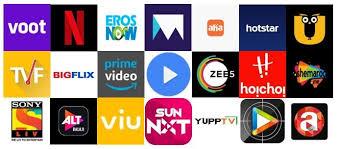
The India OTT Market Competition is one of the most intense and dynamic battlegrounds in the global media landscape, characterized by a fierce, multi-front war for consumer attention and spending. The competition is not a simple rivalry between similar services; it is a complex clash between fundamentally different business models, content strategies, and corporate cultures. On one side are the global subscription-video-on-demand (SVOD) giants, who compete on the basis of premium, exclusive original content and a high-quality, ad-free user experience. On the other side are the powerful domestic broadcasters and telecommunication-backed platforms, who compete on the basis of mass-market appeal, a deep library of local and regional content, and, most critically, the acquisition of exclusive live sports rights. This fundamental difference in strategic focus—premium originals versus live sports and local content—creates a highly competitive environment where different players are vying for different segments of the vast and heterogeneous Indian audience. The India OTT Market size is projected to grow USD 1346.38 Billion by 2034, exhibiting a CAGR of 17.2% during the forecast period 2025-2034.
The competition on the content front is a relentless and incredibly expensive arms race. The battle for exclusive digital rights to major sporting events, particularly cricket, has become the single most important competitive differentiator for mass-market user acquisition. The astronomical sums paid for the rights to the Indian Premier League (IPL) demonstrate that live sports are the "battering ram" for penetrating the Indian market at scale. In parallel, there is an equally intense battle in the scripted content space. All major players are investing hundreds of millions of dollars annually in producing high-budget Indian original series and films, leading to a "golden age" of local content production. This competition for content extends to acquiring the post-theatrical streaming rights for Bollywood blockbusters, which is another key driver for attracting and retaining subscribers. The competition is ultimately a high-stakes gamble on which content strategy will resonate most strongly with different segments of the Indian populace.
Finally, a crucial dimension of the competition is the war over pricing and distribution. The Indian market is famously price-sensitive, which has led to some of the lowest subscription prices in the world. The competition here is not just about the standalone price of the service, but about the value proposition of the bundle. The most successful strategies have involved deep partnerships with India's major telecommunications companies, where the OTT subscription is bundled for free or at a steep discount with a mobile or broadband data plan. This "telco-bundling" strategy is a critical channel for user acquisition at scale and a major competitive advantage for players who can secure these powerful distribution partnerships. The competition is therefore a complex interplay of content, price, and distribution, forcing every player to continuously innovate and adapt their strategy to survive in this hyper-competitive market.
Top Trending Reports -

 English
 Arabic
 French
 Spanish
 Portuguese
 Deutsch
 Turkish
 Italiano
 Russian
 Romaian
 Portuguese (Brazil)
 Tiếng Việt