


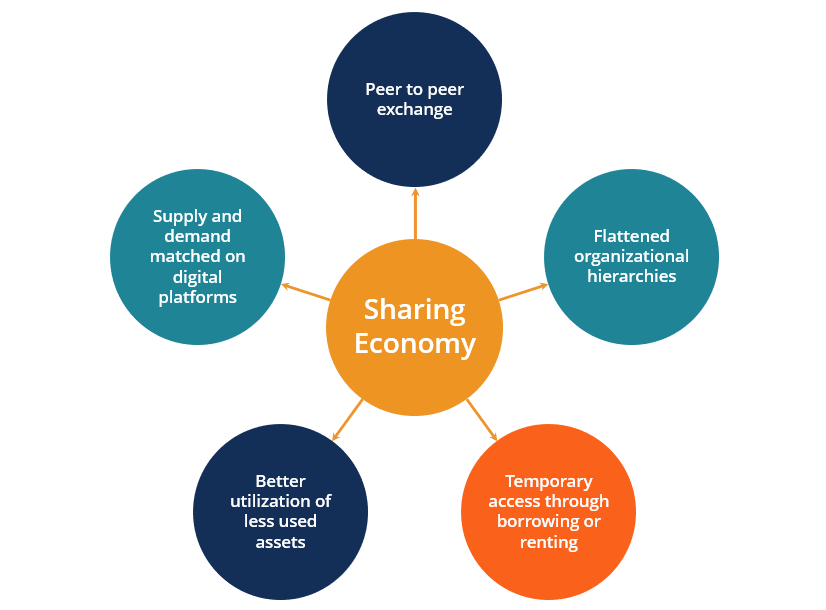
The modern Sharing Economy industry has redefined how people access goods and services by prioritizing usage over ownership. Enabled by smartphones, digital payments, geolocation, and reputation systems, platforms connect individuals who have underutilized assets—cars, homes, tools, skills—with those who need temporary access. Ride‑hailing, home‑sharing, coworking, peer‑to‑peer rentals, and on‑demand labor have become mainstream in many cities, offering new income streams for asset owners and flexible options for consumers. This model challenges traditional sectors such as hotels, taxis, and retail rentals, creating both competition and partnership opportunities. As consumers increasingly value convenience, flexibility, and affordability, and as environmental concerns push for better resource utilization, the Sharing Economy Market continues to evolve from experimental startups into a structural component of global economic activity.
Beneath the visible apps sits a complex ecosystem of technology, regulation, and trust mechanisms. Platforms invest heavily in matching algorithms, dynamic pricing, fraud detection, identity verification, and insurance frameworks to manage risk between strangers. Ratings and review systems create reputational capital that substitutes for long‑term relationships, while dispute resolution tools handle inevitable conflicts. Governments, meanwhile, grapple with classification questions—whether participants are employees or independent contractors, how to tax earnings, and what safety standards should apply. As regulations mature, many sharing platforms are shifting from aggressive disruption toward more collaborative engagement with city authorities, transport agencies, and housing regulators, seeking licenses and co‑designed frameworks that balance innovation with social protections.
The Sharing Economy industry also exerts significant influence on labor markets and social norms. Millions of people now supplement income through ride‑sharing, accommodation hosting, or on‑demand task platforms, blurring lines between employment and entrepreneurship. For some, this flexibility is empowering; for others, income volatility and lack of benefits present serious challenges. These dynamics fuel debates about portable benefits, minimum wage standards in gig work, and collective bargaining rights on digital platforms. At the same time, sharing models encourage new habits: people become more comfortable staying in private homes, riding in strangers’ cars, or renting high‑value items by the hour. These behavioral shifts have long‑term implications for how societies think about ownership, status, and community.
Looking ahead, the Sharing Economy industry is likely to expand beyond headline sectors into more specialized and B2B‑oriented domains. Equipment sharing in construction and agriculture, peer‑to‑peer energy trading, shared logistics capacity, and circular fashion rentals are all growing niches. Advances in AI and IoT will improve utilization tracking, dynamic pricing, and predictive maintenance for shared assets. However, future growth will depend on addressing core challenges: fair labor standards, housing affordability concerns linked to short‑term rentals, data privacy, and platform accountability. Those platforms that build durable trust with regulators, workers, and communities—while continuing to innovate around sustainability and convenience—will shape the next chapter of the Sharing Economy Market.
Explore More Like This in Our Regional Reports:
APAC Marketing Automation Software Market

 English
 Arabic
 French
 Spanish
 Portuguese
 Deutsch
 Turkish
 Italiano
 Russian
 Romaian
 Portuguese (Brazil)
 Tiếng Việt