


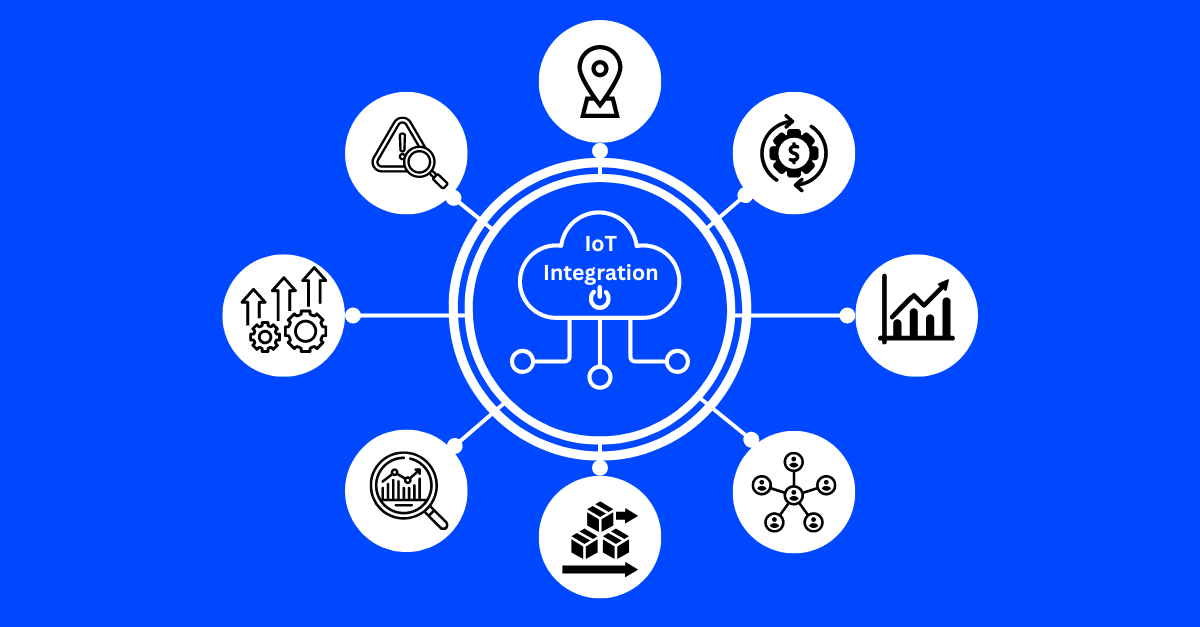
Several important IoT Integration Market Trend developments are reshaping how organizations design, deploy, and manage connected systems. One prominent trend is the rise of event‑driven, real‑time architectures. Instead of batch‑oriented integrations, enterprises increasingly adopt streaming platforms and publish‑subscribe patterns to handle continuous sensor data flows. Integration logic is implemented as microservices reacting to events—threshold breaches, anomalies, state changes—triggering automated responses or analytics. This shift enables more responsive operations, from real‑time condition monitoring to dynamic pricing and adaptive control, but also demands new skills in designing and operating highly distributed systems.
Another key IoT Integration Market Trend is the growing role of low‑code and no‑code tools. Business technologists and domain experts increasingly participate in building IoT‑driven workflows, dashboards, and lightweight applications, reducing reliance on scarce integration developers. Visual tools allow users to define data mappings, transformation rules, and triggers, while underlying platforms enforce security and governance constraints. This democratization accelerates innovation and experimentation but requires strong guardrails to avoid integration sprawl and technical debt. Vendors are responding with platforms that combine professional‑developer capabilities with governed self‑service options for less technical users.
Edge‑native integration is also emerging as a significant IoT Integration Market Trend. As more processing moves to the edge for latency, resilience, or privacy reasons, integration workloads—protocol translation, local data aggregation, policy enforcement—shift there as well. Orchestrating thousands of distributed edge nodes becomes a central concern: updating software, managing configurations, and monitoring health at scale. Integration platforms increasingly provide specialized tooling for edge‑fleet management, including zero‑touch provisioning and OTA updates. This trend aligns with the growth of private 5G, industrial edge clouds, and on‑premise AI, all of which rely on robust integration between local resources and central systems.
Finally, sustainability and responsible data practices are influencing IoT Integration Market Trend directions. Organizations seek to minimize the energy footprint of data movement and storage, favoring architectures that filter and compress at the edge, avoid redundant transmissions, and optimize retention policies. Data‑minimization and privacy‑by‑design principles are incorporated into integration planning, especially where personal or sensitive data is involved. Transparency about data flows—what is collected, where it goes, how it is used—becomes a competitive differentiator and regulatory requirement. Together, these trends point toward an IoT integration landscape that is more real‑time, user‑inclusive, edge‑aware, and ethics‑conscious, shaping the next generation of connected infrastructure and services.
Explore More Like This in Our Regional Reports:
France Digital Paper System Market

 English
 Arabic
 French
 Spanish
 Deutsch
 Turkish
 Dutch
Dutch
 Italiano
 Russian
 Romaian
 Portuguese (Brazil)
 Tiếng Việt