


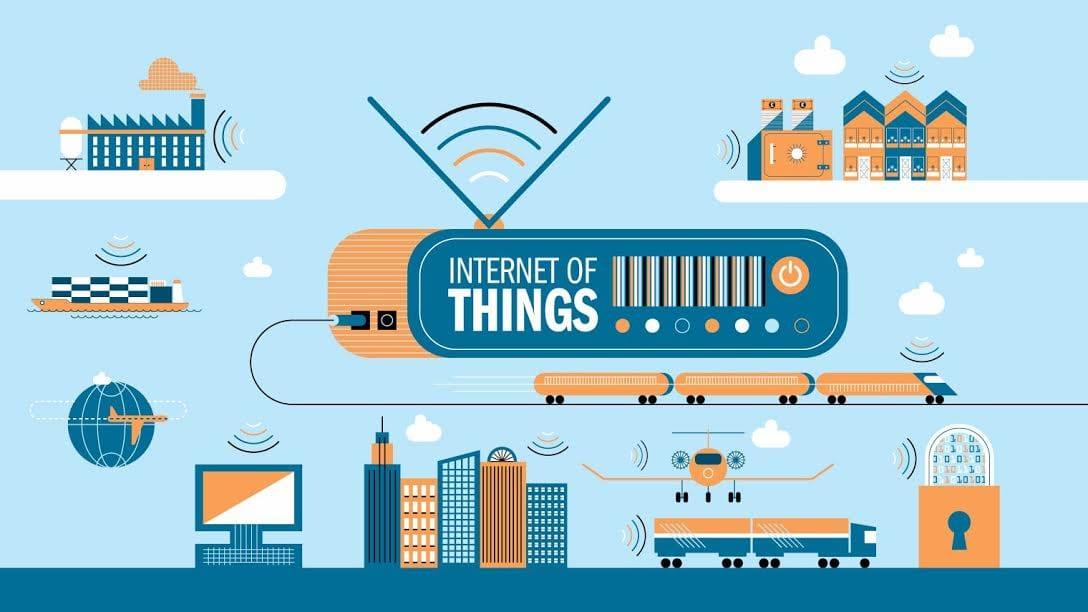
The India Internet of Things Market Competition is a sophisticated and multi-layered contest, defined less by direct, head-to-head product battles and more by the strategic competition between vast and complex ecosystems. The competition is not a simple case of one IoT device maker versus another; it is fundamentally a struggle for platform dominance and control over the most valuable parts of the value chain. The primary competitive front is the battle to become the foundational platform upon which enterprises build their IoT solutions. This is a fierce three-way race between the global hyperscale cloud providers (AWS, Azure, GCP), the major domestic telecommunications companies (led by Reliance Jio), and to a lesser extent, the large industrial technology conglomerates. Each group is competing to offer the most comprehensive, scalable, and easy-to-use platform for device management, data ingestion, and application development. The India Internet of Things Market size is projected to grow USD 114.53 Billion by 2035, exhibiting a CAGR of 12.023% during the forecast period 2025-2035.
A second critical competitive front is the battle for the connectivity layer. This is a direct competition between India's major telecommunications carriers, primarily Reliance Jio and Bharti Airtel. They are competing on the basis of the quality, coverage, and cost of their cellular IoT networks, including their expanding 5G and NB-IoT capabilities. Their competitive strategy involves not just offering a SIM card, but also providing a sophisticated connectivity management platform that allows enterprises to easily activate, monitor, and manage thousands of deployed devices. The competition here is to become the default network for large-scale IoT deployments, from smart electricity meters to connected logistics fleets. This is a high-volume, scale-driven competition where network quality and a strong enterprise sales channel are key differentiators.
Finally, the most complex competitive arena is the "solutions and services" layer, which is where the majority of the market's value is realized. This is where India's giant system integrators (SIs) like TCS, Wipro, and Infosys compete fiercely with each other, as well as with a host of smaller, specialized IoT consulting firms. The competition here is not based on owning the technology, but on the ability to use the technology to solve a specific business problem for a client. These firms compete on the basis of their deep industry domain expertise (e.g., in manufacturing, utilities, or agriculture), their project management capabilities, their ability to customize and integrate complex solutions, and the quality of their talent pool. In this space, the competition is a battle for the largest and most complex digital transformation contracts, where IoT is a key component of a much broader business overhaul.
Top Trending Reports -
South America Edge Data Center Market

 English
 Arabic
 French
 Spanish
 Portuguese
 Deutsch
 Turkish
 Italiano
 Russian
 Romaian
 Portuguese (Brazil)
 Tiếng Việt