


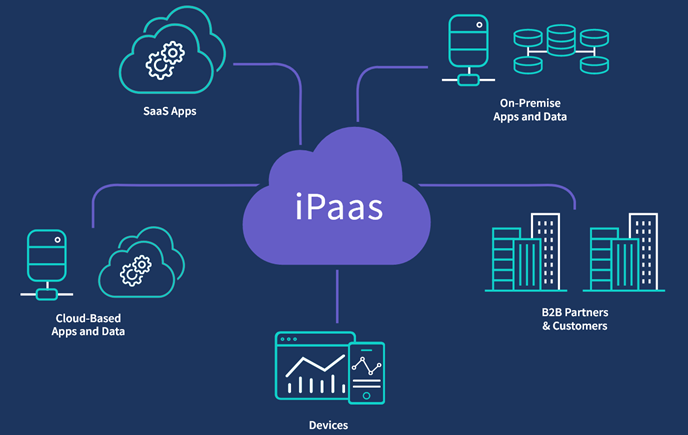
The Japan Integration Platform As A Service Market Competition is a sophisticated and deeply nuanced contest, defined less by aggressive price wars and more by a battle for trust, ecosystem strength, and the ability to navigate a unique corporate culture that values stability and long-term relationships. The competition is not a simple face-off between similar products; it is fundamentally a strategic clash between three different value propositions. On one side are the global enterprise-grade iPaaS leaders, who compete on the basis of their technological power, their ability to handle complex hybrid IT environments, and their comprehensive feature sets for API management and governance. On the other side are the powerful domestic Japanese IT service firms and specialized software vendors, who compete on the basis of their deep localization, their cultural alignment, and their reputation for reliability. A third force is the user-friendly, automation-focused platforms, which compete on simplicity and empowering business users. The Japan Integration Platform As A Service Market size is projected to grow USD 1500 Million by 2035, exhibiting a CAGR of 10.77% during the forecast period 2025-2035.
This competitive dynamic creates a unique go-to-market environment where partnerships are paramount. The global technology vendors cannot succeed in Japan with a direct sales model. The competition for the enterprise market is therefore a proxy war fought through the major Japanese system integrators (SIs). The real competition for a company like MuleSoft or Boomi is not just against each other, but for the "mindshare" and loyalty of the top engineers and sales teams at firms like NTT Data or Hitachi. The vendor that can provide the best partner program, the most comprehensive technical training, and the deepest level of engineering collaboration with these critical channel partners will ultimately win the largest share of the enterprise market. This makes the competition a battle of ecosystems, not just of individual companies, where the strength of one's local partnerships is the most critical competitive asset.
Finally, a crucial dimension of the competition is the ability to cater to the specific needs of the Japanese mid-market, which is the stronghold of the domestic vendors like Asteria. These vendors compete by offering a product that is perceived as more straightforward, more reliable, and better suited to the scale and budget of a typical Japanese SME. They compete on the basis of their long track record in the local market and their reputation for high-quality, Japanese-language support. The competition in this segment is a battle of trust and fit-for-purpose design. The overall competitive analysis reveals that while the global players may have the more powerful technology, the domestic players and SIs have a formidable advantage in relationships and local market understanding, creating a complex and balanced competitive arena.
Top Trending Reports -
UK AI ML in Media and Entertainment Market

 English
 Arabic
 French
 Spanish
 Deutsch
 Turkish
 Dutch
Dutch
 Italiano
 Russian
 Romaian
 Portuguese (Brazil)
 Tiếng Việt