


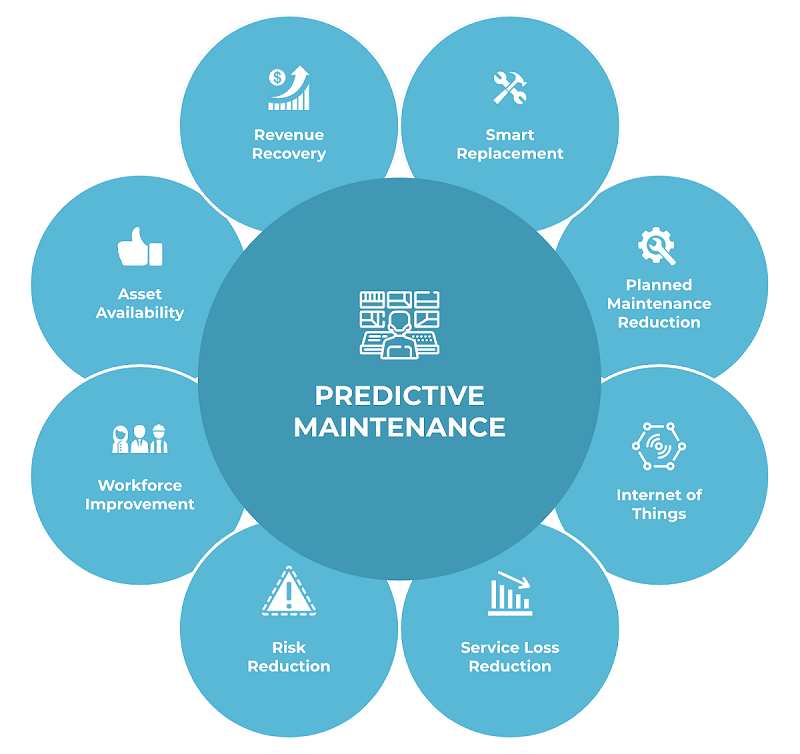
The global Predictive Maintenance Market is a dynamic and multifaceted ecosystem, featuring a diverse array of companies all competing to help industries optimize their asset management strategies. The competitive landscape includes large, established industrial automation giants like Siemens, Schneider Electric, and GE, who offer integrated PdM solutions as part of their broader digital factory portfolios. Alongside them are major cloud providers such as Amazon Web Services (AWS), Microsoft Azure, and Google Cloud, which provide the foundational AI and IoT platforms upon which custom PdM solutions can be built. A third and highly innovative segment is comprised of specialized software vendors and startups that focus exclusively on predictive analytics, offering best-of-breed algorithms and user-friendly interfaces. This mix of players creates a vibrant and competitive environment where deep domain expertise, AI capabilities, and ease of integration are key differentiators.
This intense competition is taking place within a market that is experiencing phenomenal growth, creating a massive opportunity for all participants. The industry is on a clear path to reach a valuation of USD 111.30 billion by 2030, a testament to the technology's transformative impact. This expansion is being driven by a remarkable compound annual growth rate (CAGR) of 26.20% expected throughout the 2024-2030 forecast period. This rapid growth is attracting a continuous stream of new entrants and significant venture capital investment, further fueling innovation and intensifying the race to capture market share. The expanding economic pie ensures that there are lucrative opportunities for various types of vendors, from those providing the underlying hardware to those developing the most advanced analytical models.
The market is heavily segmented by the industry vertical it serves, as the maintenance needs of one sector can be vastly different from another. The manufacturing sector is currently the largest adopter of PdM, using it to monitor robotic arms, CNC machines, and assembly lines to prevent costly production stoppages. The energy and utilities sector is another major market, applying PdM to predict failures in power turbines, transformers, and pipeline infrastructure. Other high-growth segments include aerospace and defense (for aircraft engine monitoring), transportation (for fleet vehicle and railway maintenance), and healthcare (for medical imaging equipment). The vendors who can offer pre-built models and deep, domain-specific expertise for these key verticals are the ones who are gaining a significant competitive advantage.
Looking forward, the competitive dynamics of the market will be increasingly shaped by the ability to offer end-to-end, "as-a-service" solutions. Instead of just selling software, leading companies are moving towards outcome-based models, where they guarantee a certain level of uptime or a reduction in maintenance costs for a recurring fee. This requires a combination of hardware, software, and expert services. Furthermore, building a strong ecosystem of partners, including sensor manufacturers, system integrators, and industry consultants, will be crucial for delivering these comprehensive solutions. The companies that can successfully navigate this shift from a product-centric to a solution-centric approach will be the ones that lead the market in the coming years.
Explore Our Latest Trending Reports:

 English
 Arabic
 French
 Spanish
 Portuguese
 Deutsch
 Turkish
 Dutch
Dutch
 Italiano
 Russian
 Romaian
 Portuguese (Brazil)